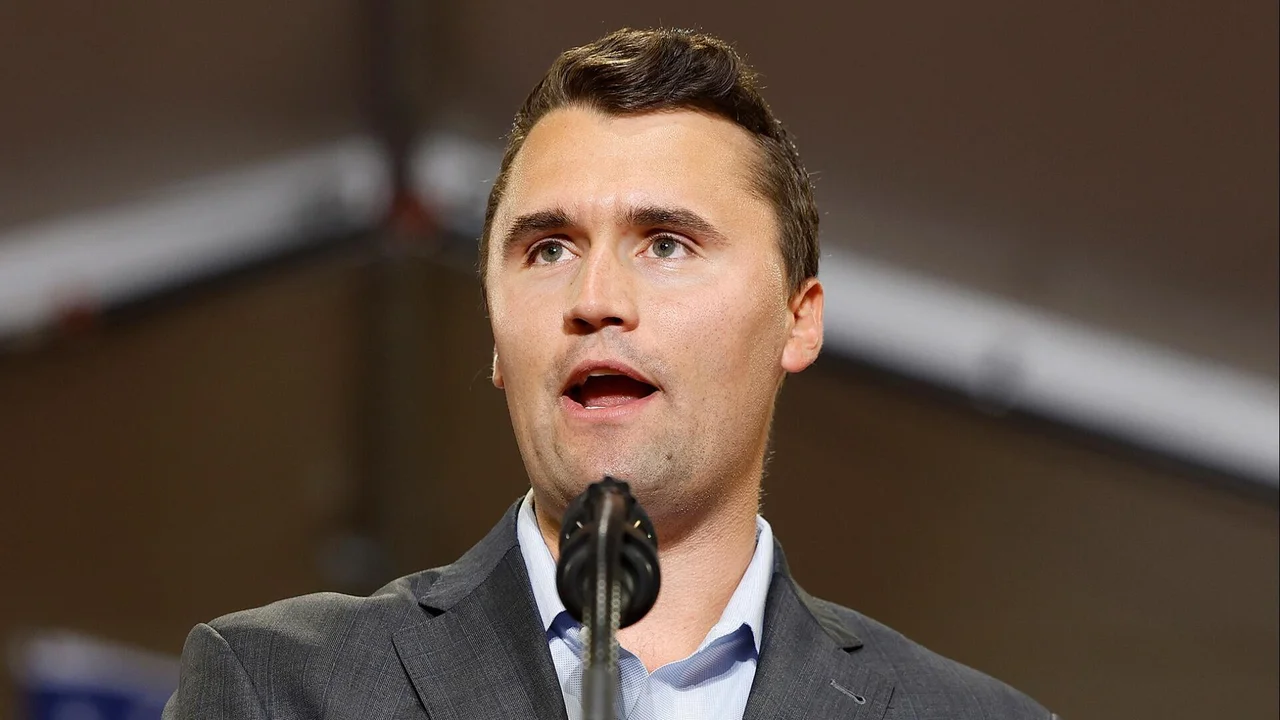
“You will never live in a society when you have an armed citizenry and you won't have a single gun death… I think it’s worth to have a cost of, unfortunately, some gun deaths every single year so that we can have the Second Amendment to protect our other God-given rights. That is a prudent deal. It is rational.” -Charlie Kirk, April 2023
Charlie Kirk has effectively offered himself as a human tribute to the Second Amendment. The pro-gun activist, speaking recently at a Turning Point USA event and subsequently mortally wounded in a shooting at Utah Valley University, made statements long before about gun deaths being “unfortunately worth” the preservation of constitutional rights.
These remarks, delivered in April 2023 at a TPUSA “Faith” event, have resurfaced and taken on new weight in light of the tragic outcome. At that event, Kirk asserted that “you are not going to get gun deaths to zero… But I think it’s worth it… some gun deaths every single year so that we can have the Second Amendment to protect our other God-given rights.”
On September 10, 2025, Charlie Kirk was fatally shot while onstage at UVU during his “American Comeback” tour. The bullet struck him in the neck; he was taken to a hospital in critical condition, and later pronounced dead.
Kirk’s earlier statements now appear as a living test case for a position many found abstractly unsettling. In essence: he offered, knowingly or not, to stand in for a concept — that some gun-related mortality is acceptable as a cost of freedom. Many critics have compared his rhetoric to a philosophical wager, with his own fate sharpening the question: who bears the cost, and is the cost ever negotiated or acknowledged until tragedy strikes?
Left-leaning commentators, gun violence prevention advocates, and lawmakers have expressed shock that the hypothetical has become horrific reality. Organizations like Giffords, Moms Demand Action, and the Brady Campaign had criticized Kirk’s 2023 remarks at the time as morally unconscionable. In those remarks, Kirk also drew analogies to traffic fatalities and said that liberty sometimes demands tolerating loss.
In the wake of Kirk’s death, there has been an outpouring of grief from conservative figures, along with condemnation of political violence from both major parties. The killing has also brought renewed scrutiny of the arguments that gun rights advocates have long made: when one insists that the Second Amendment is non-negotiable, what is the threshold at which its defenders are willing to accept casualties? How openly are those casualties acknowledged in policy and speech? Kirk’s fate has turned what was once a rhetorical cost of liberty into one literal enough to measur
The incident forces a reckoning, especially among those who believe in robust constitutional protection of gun rights. If someone who publically argued that some deaths are acceptable dies because of gun violence, what does that do to the legitimacy of the trade-off? Does it change where public opinion falls on regulation, liability, safety measures? Does it prompt more serious guardrails (background checks, safety training, safe storage laws) instead of symbolic gestures?
As of now, few in Kirk’s circle are retreating from his remarks — many frame them as courageous honesty. Some see hypocrisy; others, martyrdom. Either way, his death may serve as a stark barometer for how America grapples with its Second Amendment contradictions.
Charlie Kirk offered something few politicians do: a full-bodied example of the cost he claimed was acceptable. Whether this act will shift national debate or produce policy change remains to be seen. But for those who believe that words should match outcomes, Kirk’s final tribute has already been delivered — and the country is now, unwillingly, bearing witness.